THE LATEST
Rabbit
ANNUAL
‘Poetry invites readers to experience the event of language uncurling from these attempts to distil and convey. The ‘real’ world is dizzy with maladies, but there is pleasure, beauty, catharsis—power—in poetry’s bold and manifold efforts.’
After 40 issues of Rabbit: a journal for nonfiction poetry (2011–2024), this first Rabbit Annual (2025) signals our shift into a new phase of publication. In these pages, we showcase a bumper series of 58 new nonfiction poems, selected by guest coeditors Mark Nowak and Angela Costi.
NEW FROM THE RABBIT POETS SERIES
Carboniferous
CAROLINE WILLIAMSON
Caroline Williamson’s compelling collection is ‘able to negotiate the respective contemporary blindnesses and dogmas, and so to arrive at a way of thinking that weighs the implications of historical change.’
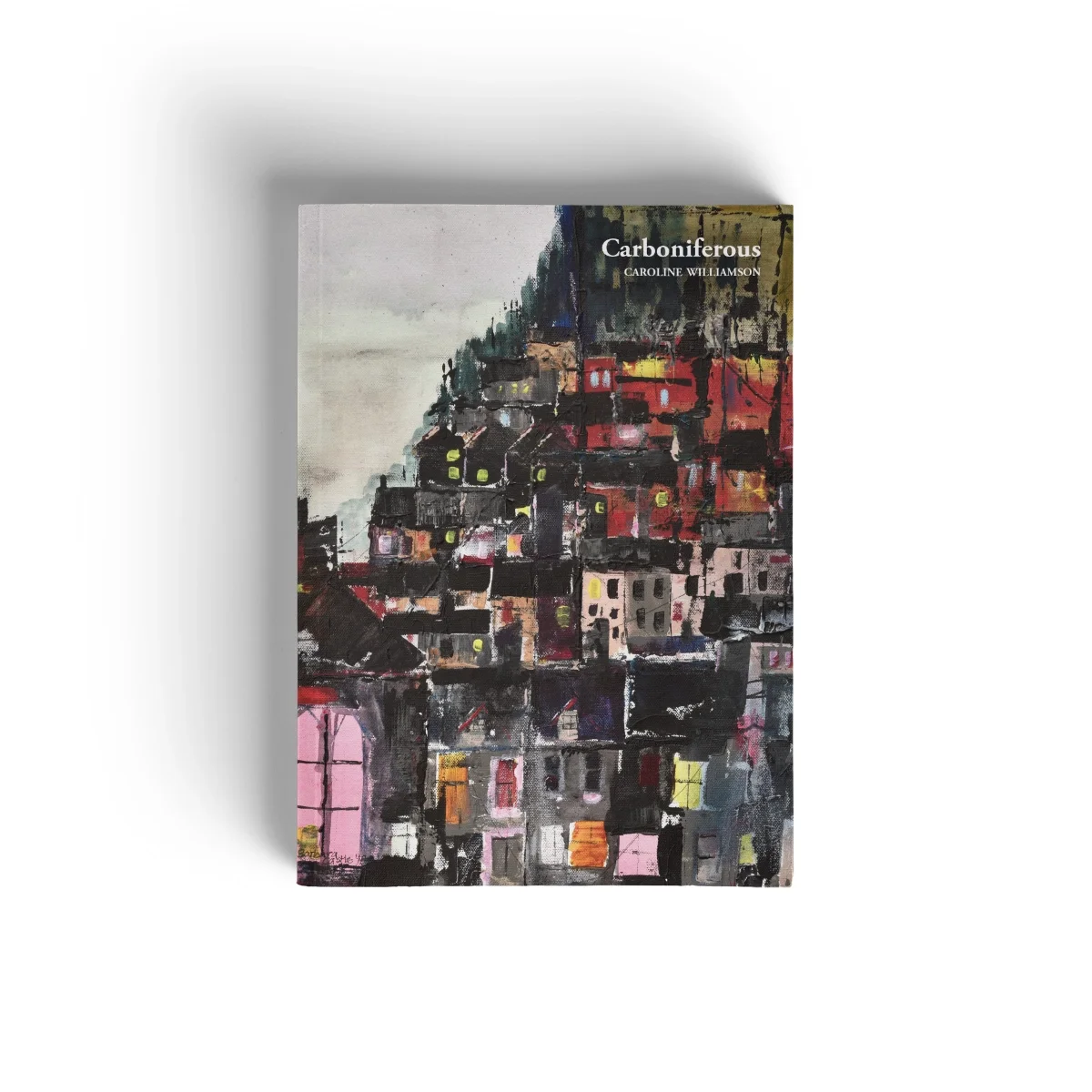
‘This book is poised between three historical moments: the late-nineteenth-century moment, when the coal mining industry is central to the sustainability of the community, the current moment, shaped by profound concerns about the climate emergency, and the Thatcherite moment in which, in South Wales in particular, communities were wrecked by the policy of pit closures. By occupying all three historical consciousnesses, Williamson’s poetry is able to negotiate the respective contemporary blindnesses and dogmas, and so to arrive at a way of thinking that weighs the implications of historical change. Carboniferous is consistently accomplished, and as it develops becomes compelling.’
—David Herd, author of Walk Song
Caroline Williamson is a poet and editor living in Melbourne, Australia. She was born in London and spent school holidays with her grandparents in Merthyr Tydfil as a child. Her collection Time Machines was published by Vagabond Press in 2023.
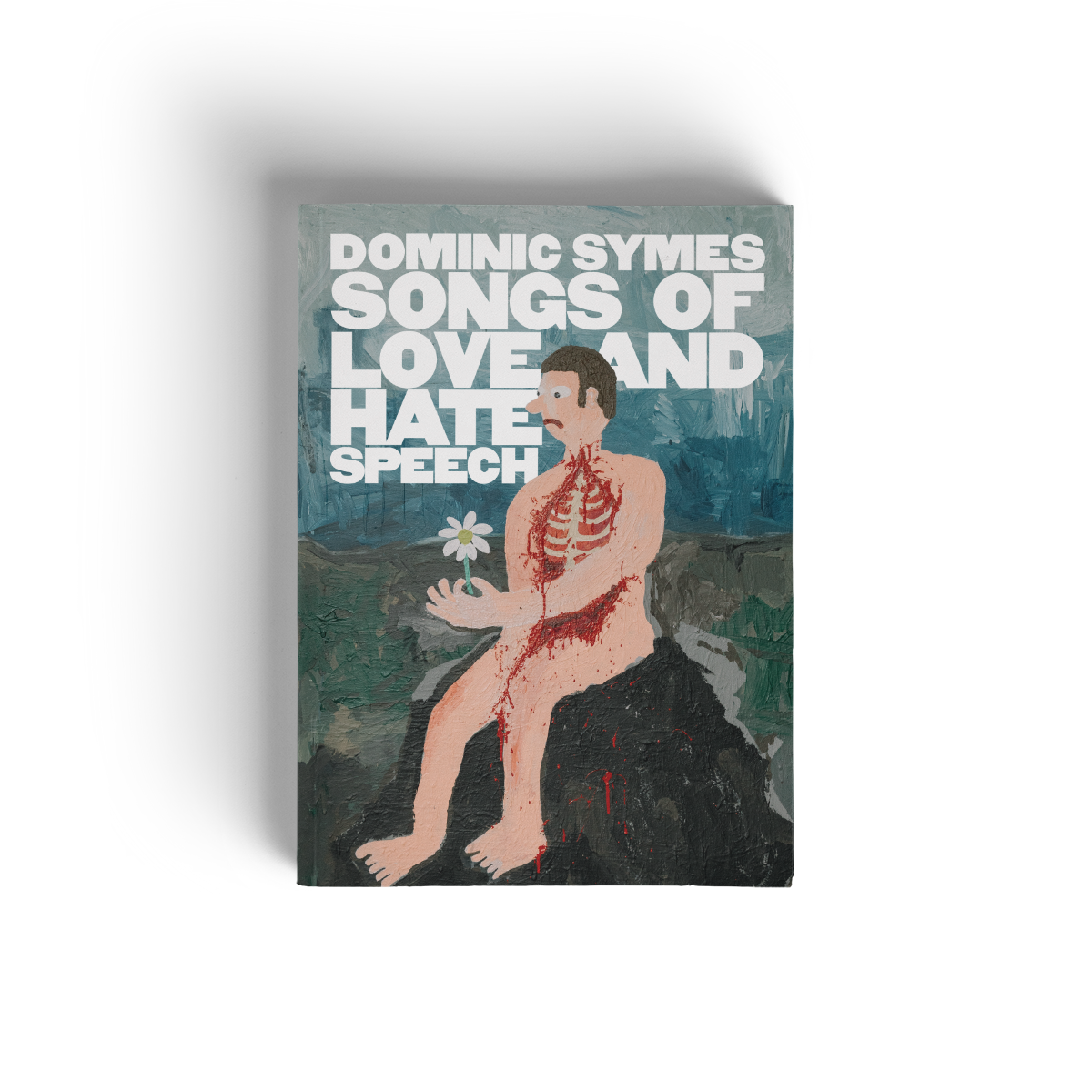
‘Dominic Symes’s songs of love and hate speech is an exploratory ramble through urban life that leaves the poet “dangling on the edge of the tax-free threshold” while constant protest shrinks to background: “here it’s FREE PALESTINE tagged on the skip outside maccas”. From the intensely compressed first poem “passing time” to playful riffs on music, poetry, work, housing, love, ironic observations casually disrupt the immersive surveillance of our era where “you‘ll read the news you’re given”. Symes’s poems lampoon the buffetings of precarity that threaten to jam into permanence. Carousing yet thoughtful, these poems shift their “patchwork quilt of tiny hatreds” into a gleeful celebratory humour that upends the cage of mediated life’s “desire cart” and instagrammed “tattoo that says NOTHING LASTS”.’
—Gig Ryan
Dom Symes lives quietly in naarm/Melbourne. He writes poems, some of which have, over the last few years, been published in Australian journals and anthologies—including Overland, Cordite and Best of Australian Poems. Recent poems were shortlisted for the 2023 David Harold Tribe Award and won the 2023 Woollahra Digital Literary Award for Poetry. His debut collection ‘I saw the best memes of my generation’ (Recent Work Press) was highly commended in the 2024 NSW Premier’s Literary Awards—Kenneth Slessor Prize for Poetry. In 2025 he was shortlisted for the Overland Judith Wright Poetry Prize and in 2026 longlisted for the Peter Porter Poetry Prize.
songs of love and hate speech
DOMINIC SYMES
Dominic Symes’s pomes are ‘an exploratory ramble through urban life that leaves the poet “dangling on the edge of the tax-free threshold” while constant protest shrinks to background.’
NOW FREELY AVAILABLE IN DIGITAL FORMAT
XIII Poems
JORDIE ALBISTON
A wish
Inside is an astonishing thing when let out. Perhaps not
All of the above applies.
Inside is an astonishing thing when let out.What goodbyes?
All of the above applies.
One manages to contain the odd caterwaul. What goodbyes?—
There is, there is an idea of the kind, after all.—’KINDNESS’, JORDIE ALBISTON
News
‘We say ‘when this is all over’ as a way of fantasising about certain things: touching people, wandering the streets, lying in the sun. But we know that there’s nothing to return to, that is, there is only something different ahead, something yet to be realised, something to hope for and build towards.’
‘It’s true that I find the horizon and the construction of vanishing-point perspective really interesting—almost a language, trying to get at a tension between inwardness and the world as it is.’
‘Borders have very little to do with physical boundaries and far more to do with ideational ones. For me, the practice of political thought is very much about understanding ideological coding, about learning how we are constructed as subjects.’
‘A lot of my poems end up being driven by a feeling, the desire to communicate something abstract in a concrete, resonant way—I look toward how language can do that, rather than structure. And I think that’s because I love the language of lyric poetry.’
‘As I’ve aged, I have developed a fairly relaxed attitude to writing poetry—it’s a form of play involving a mix of words, ideas, images, sounds, textures, shapes and rhythms—a pleasure that nothing else provides. The poem generates from nowhere, everywhere, or anywhere.’
‘In its attention to language, poetry tests the limits of what can be said. In this respect, it seems to approach those emotions or experiences that seem unrepresentable or that would render us inarticulate. In terms of structures of power, poetry is a vehicle of replication but also possible difference in its capacity to ‘tell it slant’, as Emily Dickinson put it. That is, it can enact thinking against foundation.’
‘Grappling with the parallax, / I slammed the brakes and tipped.’
‘but what’s the difference // between diving and bound-to-happen falling? / These curved lines—they must / describe passage underneath.’
‘denuded pastures knocked up with alien seed / forced into furrows with too much water, the thirstiest of crops / invasive, intensive, insistent impositions’
‘imagine a barb-wired mist. imagine / memory’s leash. your breath a steady war.’
‘it’s good to be walking / past a new tree, even / if it’s just that / i collect / myself’
‘but somebody tipped the bins / somebody wrote no in the sky’
‘A slice of pizza, is a sector; start at / the North and turn thru the required angle’
‘The bold aggrieved & cowardly respondent— / men who burst their imperfect gold box.’
‘how it sits round in my jaw / fills my mouth, boxy and serious’
Following the release of our bumper 2025 Rabbit Annual, we are pleased to open for submissions for our 2026 Rabbit Annual of nonfiction poetry, with guest co-editors Jaya Savige and Susie Anderson.
We are thrilled that our guest co-editors for this first Rabbit Annual are Mark Nowak (US) and Angela Costi (Australia).
We welcome poems that explore, interrogate and push the boundaries of nonfiction writing, and are interested in reading poetic engagements with auto/biography, documentary, history, politics, economics, mathematics, cultural analysis, science, the environment, and all other aspects of real-world experience, recollection and interpretation.
Rabbit is currently accepting submissions for Issue 40: the EXTINCTION Issue, to be guest co-edited by Elena Gomez and AJ Carruthers.
The sixth mass extinction bears the marks of centuries of capitalist accumulation. While the science of climate catastrophe is well documented and broadly accepted, ways of preventing extinction are far from settled. Poetry has engaged with the destructive nature of capitalism and imperial expansion since early English industrialisation, and contemporary poetry confronts these questions with aesthetic curiosity and force. If it feels impossible to imagine a future, poetry offers itself as a site to do just that.
Rabbit is currently accepting poetry submissions for Issue 39: the MUTINY Issue, to be guest co-edited by Jennifer Compton and Joan Fleming.
When you don’t trust the captains, it’s time to take back the ship. For Rabbit: MUTINY, we seek rogue poems that resist the usual rules of resistance. We’re after nonfiction poems, in all aesthetic registers, that scorn the tyranny of planned obsolescence, false idolatry, rabid anthropocentrism, bad governance, and the logic of the market above all else. Send us your long-sighted, large-hearted, reverent/irreverent calls to arms.
Rabbit is currently accepting poetry submissions for Issue 38: the ARCHIVE Issue, to be guest co-edited by Anne Casey and Jason Wee. How can we, as poets, return to the archive and reanimate voices and lives silenced through time and the resolve of official record-makers? How else might we think of, approach and (re)imagine archives, as cosmologies, as expansive structures for comprehending larger, wider dimensions, like the past, time, universes? For this issue, we are interested in poems that explore, engage with, test and challenge 'the archive' as place, space, repository and/or concept.
‘Poetry invites readers to experience the event of language uncurling from these attempts to distil and convey. The ‘real’ world is dizzy with maladies, but there is pleasure, beauty, catharsis—power—in poetry’s bold and manifold efforts.’
Poetry for this issue was guest co-edited by Mark Nowak and Angela Costi.