THE LATEST
Rabbit
ANNUAL
‘Poetry invites readers to experience the event of language uncurling from these attempts to distil and convey. The ‘real’ world is dizzy with maladies, but there is pleasure, beauty, catharsis—power—in poetry’s bold and manifold efforts.’
After 40 issues of Rabbit: a journal for nonfiction poetry (2011–2024), this first Rabbit Annual (2025) signals our shift into a new phase of publication. In these pages, we showcase a bumper series of 58 new nonfiction poems, selected by guest coeditors Mark Nowak and Angela Costi.
NEW FROM THE RABBIT POETS SERIES
cosmodog
HELENA PANTSIS
Helena Pantsis’s captivating collection creates ‘a poignant juxtaposition between cosmos and earth, offering a new perspective on our planet and of the canines that liven our deepest, darkest spaces.’
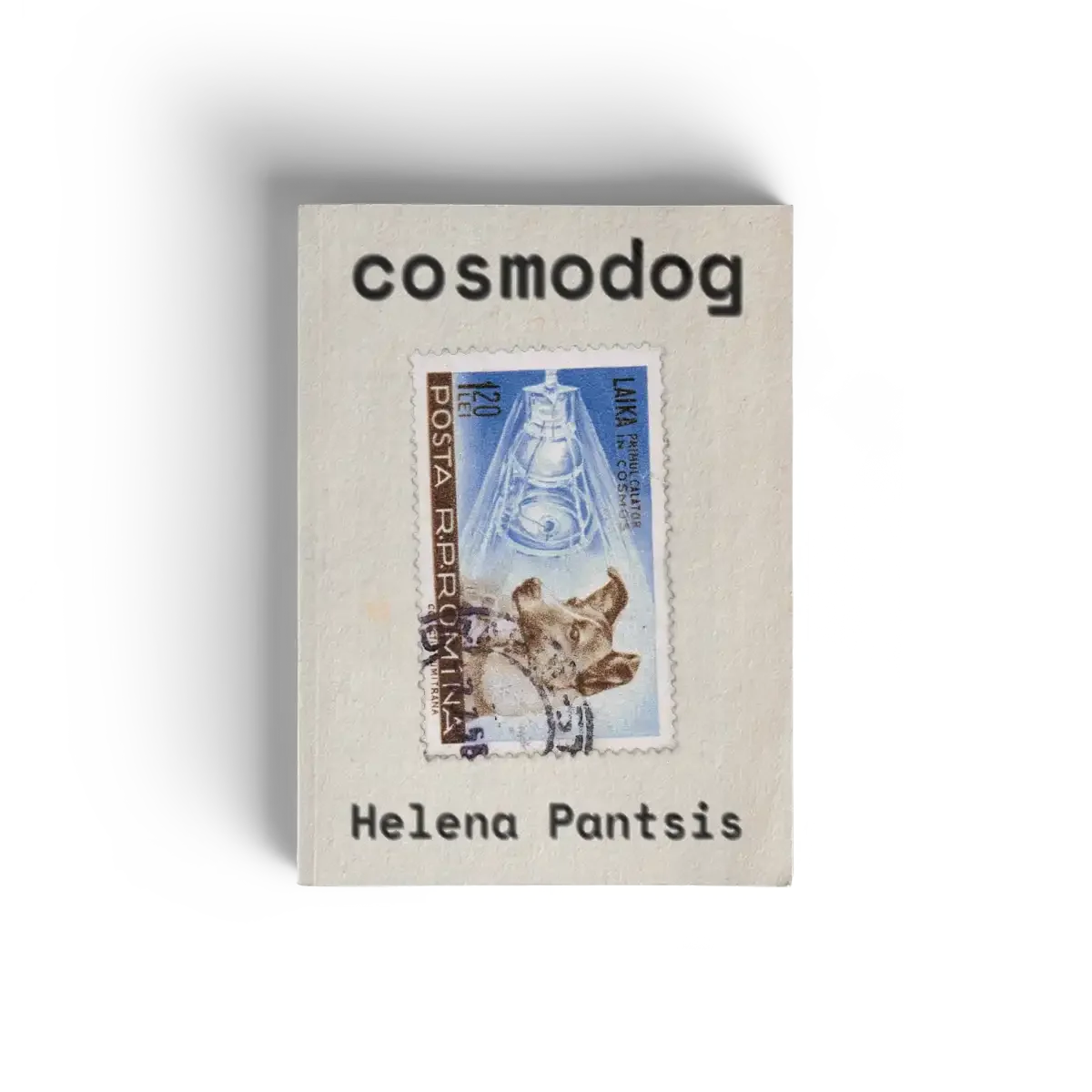
‘Captivating from the get-go, cosmodog is a well-researched and deeply heartfelt cluster of poems. Pantsis’s variation on form creates a poignant juxtaposition between cosmos and earth, offering a new perspective on our planet and of the canines that liven our deepest, darkest spaces.’
—Svetlana Sterlin
Helena Pantsis (she/they) is an editor, writer and artist from Naarm, Australia, with a fond appreciation for the weird, the dark and the experimental. More can be found at hlnpnts.com.
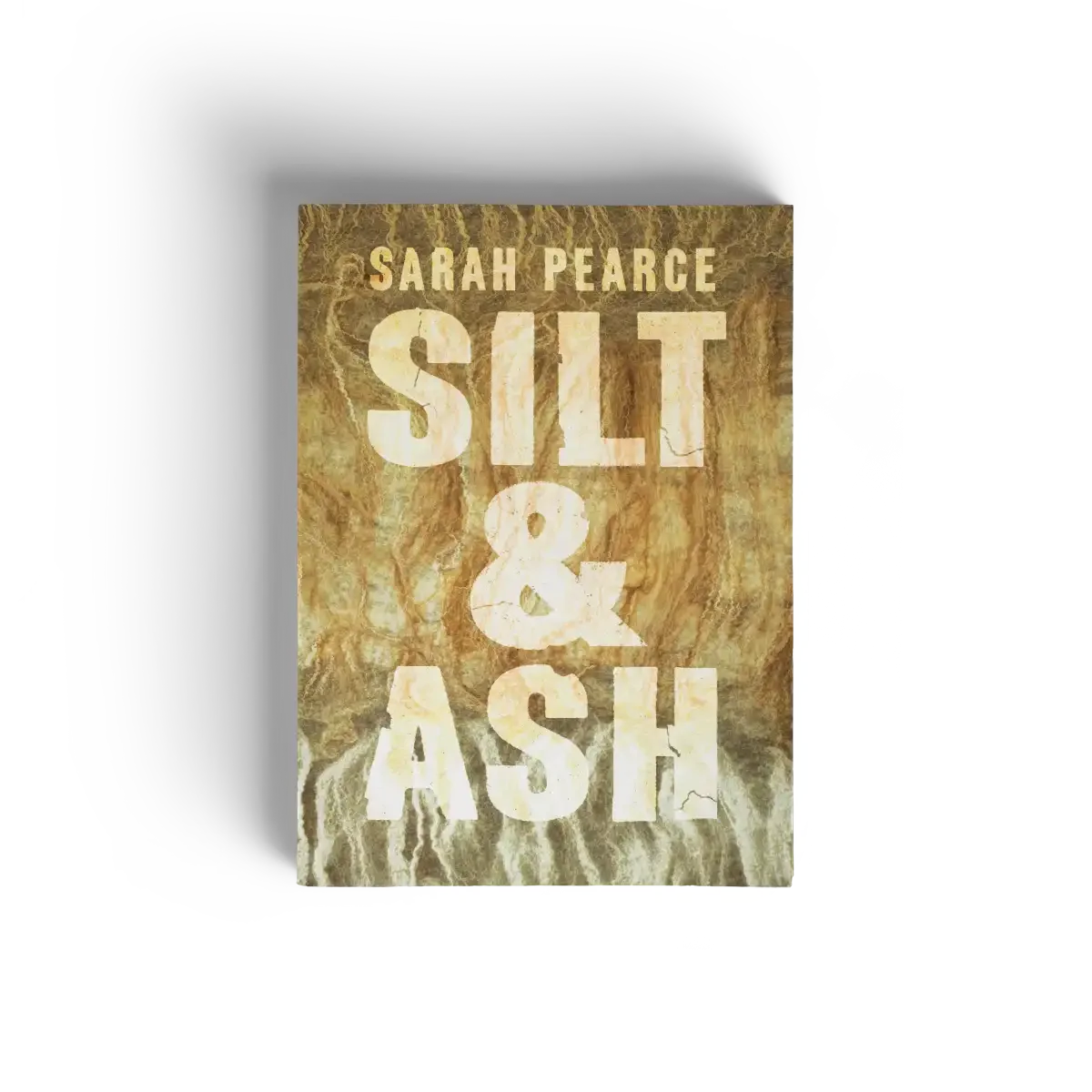
‘Silt & Ash is a stunning debut collection of found poetry by Sarah Pearce.
Sarah excavates the archive to activate visceral scenes from early colonial diaries to algal bloom data records to tourism media and weather reports, spanning two centuries. Every poem holds an intimate story, carefully curated with precision and urgency to reveal and interrogate attitudes, intentions and ideologies that shape and shadow our lives.
This ecopoetic collection is both love letter and provocation to wrench your gut and break your heart and ultimately bring us closer to Country. Brace yourself to confront the storm, parch with heat, seek the shade, and yearn for green. These terrifying truths compel a collective relationality-led responsibility to our future—to actively reckon with colonial spectres, listen to the howling, and to rework and regenerate this world anew.’
—Natalie Harkin
Sarah Pearce is a poet, editor and researcher living and working on Kaurna Country. Her poetry appears in various journals and anthologies, including TEXT, Overland, Rabbit, Cordite, Grieve and Best of Australian Poems. She is Deputy Editor of The Suburban Review. She was awarded a 2024 Literary Fellowship at the State Library of South Australia, which formed the genesis of this book. She writes about embodiment, intimacy, mental and physical health, and the environment
Silt & Ash
SARAH PEARCE
A remarkable debut collection by Sarah Pearce that ‘excavates the archive to activate visceral scenes from early colonial diaries to algal bloom data records to tourism media and weather reports, spanning two centuries. Every poem holds an intimate story, carefully curated with precision and urgency to reveal and interrogate attitudes, intentions and ideologies that shape and shadow our lives.’
NOW FREELY AVAILABLE IN DIGITAL FORMAT
XIII Poems
JORDIE ALBISTON
A wish
Inside is an astonishing thing when let out. Perhaps not
All of the above applies.
Inside is an astonishing thing when let out.What goodbyes?
All of the above applies.
One manages to contain the odd caterwaul. What goodbyes?—
There is, there is an idea of the kind, after all.—’KINDNESS’, JORDIE ALBISTON
News
‘We say ‘when this is all over’ as a way of fantasising about certain things: touching people, wandering the streets, lying in the sun. But we know that there’s nothing to return to, that is, there is only something different ahead, something yet to be realised, something to hope for and build towards.’
‘It’s true that I find the horizon and the construction of vanishing-point perspective really interesting—almost a language, trying to get at a tension between inwardness and the world as it is.’
‘Borders have very little to do with physical boundaries and far more to do with ideational ones. For me, the practice of political thought is very much about understanding ideological coding, about learning how we are constructed as subjects.’
‘A lot of my poems end up being driven by a feeling, the desire to communicate something abstract in a concrete, resonant way—I look toward how language can do that, rather than structure. And I think that’s because I love the language of lyric poetry.’
‘As I’ve aged, I have developed a fairly relaxed attitude to writing poetry—it’s a form of play involving a mix of words, ideas, images, sounds, textures, shapes and rhythms—a pleasure that nothing else provides. The poem generates from nowhere, everywhere, or anywhere.’
‘In its attention to language, poetry tests the limits of what can be said. In this respect, it seems to approach those emotions or experiences that seem unrepresentable or that would render us inarticulate. In terms of structures of power, poetry is a vehicle of replication but also possible difference in its capacity to ‘tell it slant’, as Emily Dickinson put it. That is, it can enact thinking against foundation.’
‘Grappling with the parallax, / I slammed the brakes and tipped.’
‘but what’s the difference // between diving and bound-to-happen falling? / These curved lines—they must / describe passage underneath.’
‘denuded pastures knocked up with alien seed / forced into furrows with too much water, the thirstiest of crops / invasive, intensive, insistent impositions’
‘imagine a barb-wired mist. imagine / memory’s leash. your breath a steady war.’
‘it’s good to be walking / past a new tree, even / if it’s just that / i collect / myself’
‘but somebody tipped the bins / somebody wrote no in the sky’
‘A slice of pizza, is a sector; start at / the North and turn thru the required angle’
‘The bold aggrieved & cowardly respondent— / men who burst their imperfect gold box.’
‘how it sits round in my jaw / fills my mouth, boxy and serious’
Following the release of our bumper 2025 Rabbit Annual, we are pleased to open for submissions for our 2026 Rabbit Annual of nonfiction poetry, with guest co-editors Jaya Savige and Susie Anderson.
We are thrilled that our guest co-editors for this first Rabbit Annual are Mark Nowak (US) and Angela Costi (Australia).
We welcome poems that explore, interrogate and push the boundaries of nonfiction writing, and are interested in reading poetic engagements with auto/biography, documentary, history, politics, economics, mathematics, cultural analysis, science, the environment, and all other aspects of real-world experience, recollection and interpretation.
Rabbit is currently accepting submissions for Issue 40: the EXTINCTION Issue, to be guest co-edited by Elena Gomez and AJ Carruthers.
The sixth mass extinction bears the marks of centuries of capitalist accumulation. While the science of climate catastrophe is well documented and broadly accepted, ways of preventing extinction are far from settled. Poetry has engaged with the destructive nature of capitalism and imperial expansion since early English industrialisation, and contemporary poetry confronts these questions with aesthetic curiosity and force. If it feels impossible to imagine a future, poetry offers itself as a site to do just that.
Rabbit is currently accepting poetry submissions for Issue 39: the MUTINY Issue, to be guest co-edited by Jennifer Compton and Joan Fleming.
When you don’t trust the captains, it’s time to take back the ship. For Rabbit: MUTINY, we seek rogue poems that resist the usual rules of resistance. We’re after nonfiction poems, in all aesthetic registers, that scorn the tyranny of planned obsolescence, false idolatry, rabid anthropocentrism, bad governance, and the logic of the market above all else. Send us your long-sighted, large-hearted, reverent/irreverent calls to arms.
Rabbit is currently accepting poetry submissions for Issue 38: the ARCHIVE Issue, to be guest co-edited by Anne Casey and Jason Wee. How can we, as poets, return to the archive and reanimate voices and lives silenced through time and the resolve of official record-makers? How else might we think of, approach and (re)imagine archives, as cosmologies, as expansive structures for comprehending larger, wider dimensions, like the past, time, universes? For this issue, we are interested in poems that explore, engage with, test and challenge 'the archive' as place, space, repository and/or concept.
‘Poetry invites readers to experience the event of language uncurling from these attempts to distil and convey. The ‘real’ world is dizzy with maladies, but there is pleasure, beauty, catharsis—power—in poetry’s bold and manifold efforts.’
Poetry for this issue was guest co-edited by Mark Nowak and Angela Costi.