
Tim Loveday interviews Jacinta Le Plastrier
In her former role as editor and publisher at Australian Poetry, Jacinta Le Plastrier has done the tireless (and often thankless) work of so-called Australian poetry for well over a decade. But now her much-anticipated debut, titled these memories require (Puncher & Wattmann, 2025), propels her from poetry advocate to singular poetic voice, one that abounds with tremendous confidence and authority of craft. To me, these memories require both atomises and reanimates the experiences of the traumatised child, illuminating through formal experimentation and seismic shifts in register our desperate longing to simultaneously remember and forget, both as individuals and as a culture broadly. This is a poetics of the body, one that rejects simple lyricism in favour of movements that land, rather unsettlingly, between our joints. As such, these poems force us, time and again, to ask uncomfortable questions of ourselves and of our neighbours in ways that only the best poems can.
I had the honour and delight of getting to sit down with Jacinta to talk through her work in these memories require, as well as her role as poetry advocate and editor.
‘Poetry invites readers to experience the event of language uncurling from these attempts to distil and convey. The ‘real’ world is dizzy with maladies, but there is pleasure, beauty, catharsis—power—in poetry’s bold and manifold efforts.’
Poetry for this issue was guest co-edited by Mark Nowak and Angela Costi.
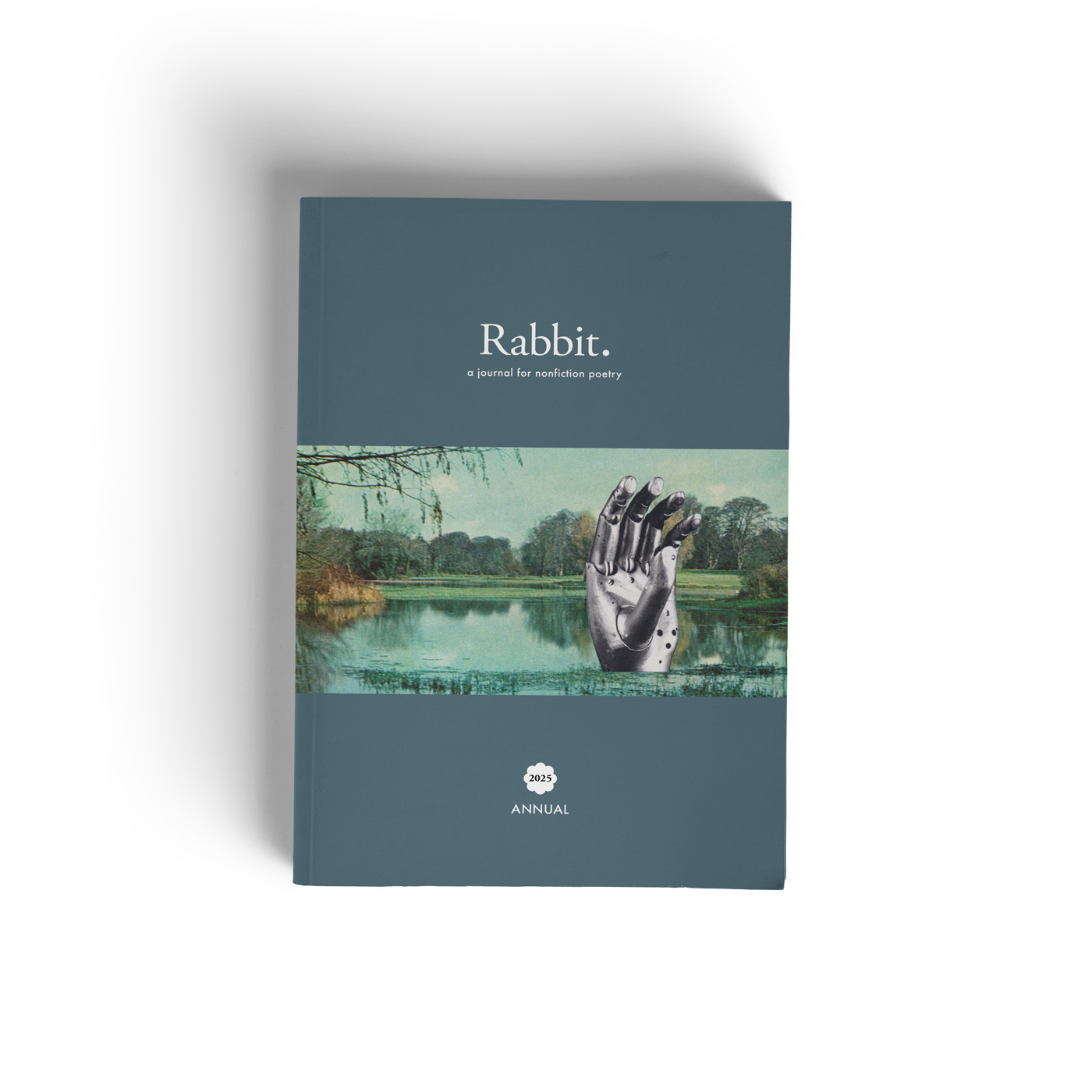
This interview originally appeared in the 2025 Rabbit Annual.
Tim Loveday: You recently released your debut collection these memories require, which as I understand it, you’ve been working on for over a decade now. Can you tell us a bit about the collection itself, as well as the process you went through in writing it?
Jacinta Le Plastrier: The book’s title—these memories require—is my own term, which crystallised as its sonar rein after reading a range of seminal and contemporary scholarship on trauma, specifically gendered and incestuous violences, but not just those.
Written and rewritten over 12 years it is very important to me, not personally but collectively. Its core thematics are around the extraordinary thinking of writers linked to what is known as ‘haunting’, a term created by Avery F Gordon in 1997 in a treatise so influential it resides still across the world on curricula unearthing trauma and the ‘unspeakable’. This last term is from scholar Judith Herman (see poem, ‘Canto 1’).
I wanted to poetically engage with (and with the intention of doing so idiosyncratically) their works, of such treacherous terrain. For me, key is the sense of community/ies these writers and other poets of these thematics create. It sounds hyper-intense perhaps, but this sense of community creates a ground, even halo, of commonality, though stubbornly unstable. In my own case, during a number of breakdowns writing these memories require, this purposiveness kept me on this side of the asylum. I could sense them alongside me.
TL: I often tell my students that the strongest attribute a poet has is their capacity to observe and take note. In these memories require there’s an attention to the image as a poetic device that can both expand and contract, mirroring, in some sense, the nature of memory as we move both past it and—in re-remembering—through it. When writing the collection, which often deals with themes of complex childhood trauma, how did you navigate this re-remembering, of going back to observe and note the past?
JLP: By allowing instability. There is no way of entering these themes, especially where they hinge, unhinge, hinge, unhinge with one’s own lived moments/memoried layers, and those of others known and close to you (who may not have survived), without allowing the re-emergence of PTSD’s visceral fear and harrowings. Being prepared to go through it all again, whether your stories, others known to you, others collectively known to you, as you voice the poems to come through and then find what you intend to be their most powerful form.
Because certain violences, especially sexual violence, usually do not experience public justice—or in the case of incest, familial acceptance and redress—you have to be prepared to grit/crawl through the poems as they arise, and defiantly. One also has to be unapologetic in wanting to investigate why sexual trauma, especially through the actions of trusted ones, is inexorably destructive, and usually for a lifetime; also why nearly always the victims, not perpetrators and their protectors, are the ones who are isolated, their courageous telling discredited in what I call insanity-profiling (She/He/They/X are just mad! THEY HAVE SERIOUS ISSUES!).
Regarding observation and noting, great point. For me, then, it would be turning observation into insight but not as a conscious methodology; I see poems, books and artworks being ‘beings’ in their own right; you have to get out of the way and constantly ask them what they want to say, to be said.
In the case of these memories require, the repeated appearance of children, indeed what I call ‘the child’, is steerage; so while the scholarship I mention is directly roped to only a few poems, they underpin as a kind of stamina, every poem in the book, which is to reach back to ‘the child’ who remains incorruptible; to speak for this child who was not able to speak or if they did, be heard. This is not a sentimental quest.
TL: In terms of voice, the work is quite inventive, wherein you fuse both a high and low register throughout. I’m thinking particularly of the prose poem ‘the storm’, which appears as a sort of stream-of-consciousness, and in fusing these registers, radically destabilises senses of scale in the poem, moving it from intimate to abstract to estranged to embodied time and again throughout. What do you think the genesis of this voice and work is, and how do you hope to affect your reader in writing this way?
JLP: For me a poet does not have a voice, they have so many possible voices. How it happens to me usually is that a poem always dictates itself. It is like being on mind-altering drugs perhaps; you are just present to the weird words, lines, images, as they arise all by themselves. I never set out to write an individual poem. Ahead of a poem I always sense it before, which can be across months, or a day or a night. I get scraps of phrases, ideas … and then the compulsion to finally write it down, word by word, line by line, stanza by stanza (if in stanzas). It is a matter of a conversation, really, between you and the poem that you are recording. In terms of affecting the reader, I don’t think of this: what I am then doing is releasing this conversation (with poem) to converse with a separate reader, a reader who has equal power.
TL: The poem ‘Canto 1’ in your collection opens with the quote by Judith Herman, ‘the conflict between the will to deny horrible events and the will to proclaim them aloud is the central dialectic of psychological trauma,’ taken from her seminal work, Trauma and Recovery. With this quote in mind, I’m wondering how you think poetry—and more specifically your poetry—might engage with this dialectic, and how a poem may or may not function to both deny and proclaim simultaneously?
JLP: This is such an excellent and fascinating question and one I have not actually consciously reflected on before. In terms of ‘Canto 1’, it is a destabilised poem which probably tightwires in regard to this dialectic. It wrote itself, starting with the single word line, ‘destabilise’ and finishing with that powerful child … and the note then on the actual introduction of Herman’s book, which is so mind-blowing in its accuracy (for me) and articulacy. Her idea that when we speak the unspeakable we are usually forced to do so in an unreliable, fragmented manner is at the heart I believe of how the perpetrating systems and persons are able to renounce those of truthfulness and repeatedly and repeatedly.
I often think of Virginia Woolf, the unbearable erosion that occurred for her around childhood familial sexual assault until, like so many of what I call our dead, she raised her hand against herself, exhausted by decades of survival and self-doubt (around the veracity of her experiences).
TL: As mentioned, I’ve now had the luck of seeing you read a number of times over the past six months or so, and I’ve been wildly impressed by your ability to embody the poem on stage. What advice might you give to younger poets coming up in the space who are yet to work out how to read their work aloud? Do you have any tips on how to best work with the poem and/or interpret it for performance?
JLP: I have rituals, what I call a run-up, ahead of a reading, any reading, because I am extremely highly strung. This is part of PTSD but I cherish it because, like an instrument, you sense so many things … But it does mean I need to prepare carefully for a public event. I will often walk in nature the day ahead. On the day, I like to have a time of silence and journal and make notes, to create intentions to serve the work the best I can. I also always know what I am going to read and what order—a safety clause—with the poems printed out. I also always under-read in terms of time limits. If I need to calm more, I take a small part of a pill such as Serepax (on prescription from my long-term GP) just ahead of the event.
TL: You’ve been a long-standing champion of Australian poetics, having helmed the national poetry body, Australian Poetry, as both the CEO and Publisher over the past decade, and quietly publishing poetry yourself for far longer than that. In terms of themes and focus, what do you think are the most significant changes you’ve seen in the poetry being produced in this country across this tenure?
JLP: Well, I am no longer in these roles (in order to write), though I continue to edit as a freelancer for AP. The changes I saw in contemporary Australian poetry—what was being written and what was being published—were seismic in a decade, co-created by AP with many other platforms, journals and organisations … There has been pushback on this, at times, by a demographic used to populating any publication (usually but not always white lineage, most published extensively previously). My attitude always was: you can dissolve barriers without creating new ones, with thanks to Ellen van Neerven for this insight.
But the main thing I would note: an assertiveness by Australian poets, across all and multiple lineages and communities, to write poems of an assuredness, especially when experimenting with form, to reformat what a page is, and how it can be used.
TL: In 2021, you founded the annual publication Best of Australian Poems alongside now former Overland poetry editor Toby Fitch and award-winning poet Ellen van Neerven. In the calendar of Australian poetry publications this is inarguably one of the highlights, offering a rare and in-depth portrait of where our poetry is and where it’s headed, with each anthology curated by two guest editors. I’m wondering if you can speak to what inspired this publication initially, the process you went through to realise it (especially in terms of working with Toby and Ellen) and why you all felt it was important to the scene at the time?
JLP: It was definitely Toby’s initial idea a few years after the wonderful Black Inc. series had ceased. He rang me to suggest this new project. It took about 18 months for us to discuss often and develop as a model, where we came up with one which is double-pronged; for guest editors, each year of the highest repute and with broad poetics and respected knowledge, to do their own extensive reading alongside a public open call-out. What was experimental was that poems submitted could be previously unpublished, if written or performed in the eligible timeframe, alongside poems that were previously published in said timeframe. It meant a dissolution of any idea of editors choosing only known poets or publications. You could be an unknown poet and still be considered. Its importance is that it has become a barometer, a snapshot, of what Australian poets are writing, and publishing, across roughly a year. The guest editors usually read thousands of poems for approximately 100 poems finally chosen. It’s a tough, passionate process to do that.
TL: According to the Cultural policy ‘Revive’, which was released in mid-2023 by the Albanese government, we’re getting a poet laureate in the near future, a point brought to the fore once more with the recent establishment of Writers Australia and the appointment of their board. There’s been much public debate about who that poet laureate might be, what they might do and how the role might function, with, to my mind, most of these debates focusing on how such a role might elevate Australian poetry, especially in terms of expanding our readership and getting our poetry out there. On that note, do you think Australian poetry needs to be elevated per se, and if so, what might we do collectively, beyond the poet laureate, to elevate poetry in Australia?
JLP: Funding, and more funding, is my answer, for organisations serving poetry, and individual poets. It is unfortunately my observed truth that most amazing poets I read, or know, are still in the enduring pendulum of how to make money/income sufficiently while still maintaining a vital writing/writing-related practice, and for a long duration.
TL: I’ve noticed that recently you’ve been rocking a RWAG (Readers and Writers Against Genocide) shirt at a number of public events, including your launch (which I had the delight of hosting!) and your appearance at Melbourne Writers Festival. More broadly, you’ve been outspoken about your support for Palestinian self-determination and resistance, as well as First Nations sovereignty in this country, and these issues being represented in poetry. I’m wondering then what you think the relationship between activism and poetry is, and how it’s informed your work in the space, both as a publisher and as a poet?
JLP: I only wear that t-shirt in complete humility and deference to all those suffering the horrors and atrocities in Gaza, also in the West Bank, and other tormented and hunted areas; for Sara Saleh, Hasib Hourani; my own daughters and others of Australian-Arabic lineages; for all those I do not know and whose images I see, usually without names, during this unimaginable terror, dehumanised & propagandised; the starving-to-death.
I see poetry only as activism. It is that straightforward for me.
It doesn’t mean every poem you write or read is loudspeaker activist; but it is an act of resistance to write a true poem, to publish it, for it to be read, an act that challenges fearfulness and obedience to powers that wish persons not to be free.
TL: Following on from that last question, I’m keen to get a sense of how working for Australia’s national body has influenced and/or shaped your poetry, specifically? Are there any specific moments when you remember being inspired by a particular poet or particular idea that came to you in your role as publisher and later found form in your work?
JLP: No. It is true that I have been immersed in Australian poetry over this time; but I have always been immersed, usually by reading others. Having said that, a thrum for me, with so many poems and books being published, has been, and also in regard to these memories require: what is the point of writing or publishing anything unless it is something only you could have written? This is not being grand, it is a commitment. Write what you think only you could write.
TL: You came up into the writing world through journalism. What influence do you think your experiences as a journalist has had on your poetic craft if any, and what things do you think you’ve had to learn, relearn and unlearn as a consequence?
JLP: At 17 I was working in the newsroom of a major metropolitan newspaper, followed by other newsrooms. The critical thing I learned there was: deadlines! And word limits. You had only so many words and you had usually under an hour, if that, to write it. The deadlines could not be missed. The newspaper, in print, had to go to the presses and go out. A great discipline to learn for any writer, yes? But I want to tilt this to poetry and the question of ‘timing’. For me, now gathering near 40 years of writing poems, and with long pauses across an unusual trajectory, knowing when to write a poem has become the flare. Wait … wait … wait. Then write it.
I make it sound simple but the when is when the poem is readied. There can still be editing but the firstborn of a poem arrives much closer to its final self when you allow ‘timing’ to be a generative tool.
Thanks for talking to me, dear Tim.